There is a substance which has a (largely unappreciated) value which supersedes oil and gold.
My thoughts were stirred after reading about a woman named Mmankosana Letsoela, who lives in a Lesotho village north of Maseru, and who rises early very morning to stand in a queue, seemingly up to 2 hours at a time, to fetch water in her plastic drums.
It intrigues me how the everyday person always seems to lose out in developing countries that have so much potential. How is it that in a country which boasts an amazing feat of engineering, whereby a system of big dams drain into each other through tunnels running underneath mountains to ultimately drain into neighbouring South Africa, it’s own ordinary citizens have no benefit from this, and must go to great lengths to get their own fresh water?
Johannesburg is the largest city in the world that is not near a sustainable water supply. No wonder the Lesotho Highlands Water Project was conceived many years ago, and that millions of dollars go towards buying water from faraway Lesotho. Most of Lesotho’s national budget is made up from these royalties. That’s all fine. But why the delay in the Lesotho Lowlands Water Supply Scheme to supply its own people with water?
I’m also intrigued with the increasing realities of not just that South Africa faces a potentially major water supply challenge, but that water will possibly become a precious global commodity. Never mind the value of oil and gold, which drives modern politics and economics. Fresh water drives fundamental life on planet earth.
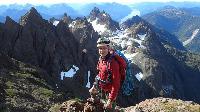
It makes me mindful of one of southern Africa’s major water generators: the Maloti-Drakensberg Mountains. Along with all the joy and rich experiences I have on this scared highland, I must consider that I have more to do than just water my garden less back home. As a mountaineer I must be mindful that I’m treading on a delicate water factory. I must be mindful of ways to protect this region, and to ensure that the people living there benefit too and be part of that.
I don’t need to feel guilty when I drive past people who have much less than I do, on my way up Moteng Pass or Mafika Lisiu Pass in a 4x4 packed with expensive gear. But I can be part of making a difference to the region and its people.
These thoughts were inspired by the article Too Much Water And Not Enough to Drink.