
Everest basecamp Gokyo trip report
08 May 2016 17:14 #68321
by Riaang
Replied by Riaang on topic Everest basecamp Gokyo trip report
Day 6 and we wake up to another perfect day. Today we go to Gokyo. We have yet another morning with perfect weather, and after a bowl of oats we hit the climb to first lake. I decided to try oats for breakfast, the continental breakfasts doesn’t seem to work for me when they are immediately followed by a steep climb. First lake lies at the top of the small pass, and after climbing about 1000 stone stairs we arrive at the top. It’s a very small lake and soon we pass it and arrive at second lake. It’s a bit eerie with the mist covering most of the surrounding area, but just after the lake we met a group of hikers coming down from Gokyo and they advise us that sunshine awaits us at third lake. We arrive at Gokyo on the shores of third lake at about 10am, in sunshine but with a cold wind blowing. Arriving at Gokyo our host greets us with a cup of hot peach tea, but the dining room is so hot we have to let it cool down a bit before we can drink it. We order lunch and drop our bags in our room. Seeing that it is still early we decide to hike to fifth lake, which is the best viewpoint from which to see Everest on our whole trip. Gokyo is already at 4850m ASL, but now we climb another 350m to 5250m ASL. The walking is fairly difficult as you walk partially on moraine (old parts of the glacier covered in rock), which goes steeply up and down over loose rock covering the glacier. And at this altitude there is about 1/3 less oxygen available in the air than at sea level, which we can clearly feel. The moment you start pushing harder you go completely out of breath and need a minute or two to get your breath back.
We eventually pass the small peak on our right, having a clear line of sight of Everest. We should go wow, but unfortunately a cloud covers most of the mountain. We stay for about an hour but more clouds float in from the right, obscuring our view even more. Now and then we catch a glimpse of the south col, then Lhotse, then the top of Everest but never a complete open view. Disappointed and dejected we walk back to Gokyo. This trip out to 5th lake was quite exhausting, and we didn’t even see Everest properly. We did about 17km’s today, at altitude and over difficult terrain and have nothing to show for our efforts. That is the nature of hiking in this area in September, you take a chance and it doesn’t always pay off. We eventually arrive back at the hotel only to be greeted by an oven when we open the bedroom door. The sun was shining directly into our room, but it was also reflecting off the lake, doubling the amount of sunlight. Bonus – all our wet clothes we put out to dry were by now properly dry . Tomorrow morning we have to start early so as to see the sunrise over Everest from Gokyo-Ri, the little hill opposite Gokyo, from where you have the second best view of Everest on our trek. One look at the hill and I wonder if our long excursion to 5th lake was such a good idea. The hill is nearly 600m high, and you hike/climb it in a distance of about 1,2km’s, giving it an average incline of 45 degrees. Properly steep, and at this type of altitude will make for quite a tough climb. With a good nights rest ahead of us we should be able to recover sufficiently to manage Gokyo-Ri, but now I just want dinner and my bed.
Suuuuucchhhhh – I wake up with a jolt! It felt like somebody had pushed my head under water for too long and as I burst through the water surface I took a long, deep breath to get some oxygen into my lungs. That was not fun!!! One of the side effects of altitude is that it affects your sleep patterns, causing you to stay more awake and wake up more regularly. I’ve previously experienced sleeping issues in the Drakensberg, but it was more confined to battling to fall asleep than drowning in CO2. Apparently I breathe very shallow when I sleep, and this causes the CO2 levels in my lungs to increase. The way your body restores the 02:CO2 levels in your blood is to force you to inhale deeply, which had now woken me up. A few hours earlier our guide pulled out a little device which measures your oxygen saturation level in your blood, as well as your heart rate. Both Sanet and myself were fine (84% and 82% respectively), but my heart rate was 92 BPS which was a bit concerning. Again, your body tries to adjust to the lower levels of oxygen in the air by increasing your heart rate (and therefore blood pressure) so that you can force more air into your lungs, even when sleeping. Sanet, being bionic woman, never suffered any of these side effects.
Sunrise at Fanga
My view from Fanga as I was brushing my teeth
The trek up to Gokyo from Fanga
Third lake just before Gokyo
Gokyo with Gokyo-Ri on the left
We eventually pass the small peak on our right, having a clear line of sight of Everest. We should go wow, but unfortunately a cloud covers most of the mountain. We stay for about an hour but more clouds float in from the right, obscuring our view even more. Now and then we catch a glimpse of the south col, then Lhotse, then the top of Everest but never a complete open view. Disappointed and dejected we walk back to Gokyo. This trip out to 5th lake was quite exhausting, and we didn’t even see Everest properly. We did about 17km’s today, at altitude and over difficult terrain and have nothing to show for our efforts. That is the nature of hiking in this area in September, you take a chance and it doesn’t always pay off. We eventually arrive back at the hotel only to be greeted by an oven when we open the bedroom door. The sun was shining directly into our room, but it was also reflecting off the lake, doubling the amount of sunlight. Bonus – all our wet clothes we put out to dry were by now properly dry . Tomorrow morning we have to start early so as to see the sunrise over Everest from Gokyo-Ri, the little hill opposite Gokyo, from where you have the second best view of Everest on our trek. One look at the hill and I wonder if our long excursion to 5th lake was such a good idea. The hill is nearly 600m high, and you hike/climb it in a distance of about 1,2km’s, giving it an average incline of 45 degrees. Properly steep, and at this type of altitude will make for quite a tough climb. With a good nights rest ahead of us we should be able to recover sufficiently to manage Gokyo-Ri, but now I just want dinner and my bed.
Suuuuucchhhhh – I wake up with a jolt! It felt like somebody had pushed my head under water for too long and as I burst through the water surface I took a long, deep breath to get some oxygen into my lungs. That was not fun!!! One of the side effects of altitude is that it affects your sleep patterns, causing you to stay more awake and wake up more regularly. I’ve previously experienced sleeping issues in the Drakensberg, but it was more confined to battling to fall asleep than drowning in CO2. Apparently I breathe very shallow when I sleep, and this causes the CO2 levels in my lungs to increase. The way your body restores the 02:CO2 levels in your blood is to force you to inhale deeply, which had now woken me up. A few hours earlier our guide pulled out a little device which measures your oxygen saturation level in your blood, as well as your heart rate. Both Sanet and myself were fine (84% and 82% respectively), but my heart rate was 92 BPS which was a bit concerning. Again, your body tries to adjust to the lower levels of oxygen in the air by increasing your heart rate (and therefore blood pressure) so that you can force more air into your lungs, even when sleeping. Sanet, being bionic woman, never suffered any of these side effects.
Sunrise at Fanga
My view from Fanga as I was brushing my teeth
The trek up to Gokyo from Fanga
Third lake just before Gokyo
Gokyo with Gokyo-Ri on the left
Please login or register to view the images attached to this post.
The following user(s) said Thank You: Richard Hunt
Please Log in or Create an account to join the conversation.
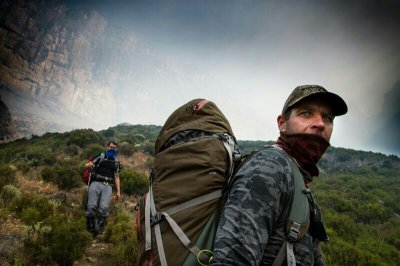

08 May 2016 17:19 #68322
by Riaang
Replied by Riaang on topic Everest basecamp Gokyo trip report
Gokyo-Ri
Gokyo teahouses
View over third lake from our teahouse
Further view over third lake
PANCAKE at Gokyo
Fourth lake
Gokyo teahouses
View over third lake from our teahouse
Further view over third lake
PANCAKE at Gokyo
Fourth lake
Please login or register to view the images attached to this post.
Please Log in or Create an account to join the conversation.
08 May 2016 17:22 #68323
by Riaang
Replied by Riaang on topic Everest basecamp Gokyo trip report
Close to fifth lake
View on Everest from fifth lake
View on Everest from fifth lake
Please login or register to view the images attached to this post.
Please Log in or Create an account to join the conversation.
08 May 2016 17:27 #68325
by Riaang
Replied by Riaang on topic Everest basecamp Gokyo trip report
Day 7. We get up at 4:30am, had breakfast at 5am and started the climb at 5:30am. The average time to get up this hill is 3H30min so you do want to start it with something in your stomach. We got about 1/5 up the way when first light appeared. We managed to walk in the shade (it was nice and cool) up to about half way before the first rays of sunlight struck the ground at our feet. When we started we could see the headlights of other hikers further up the hill, but soon they disappeared from view as they climbed over the rocky section higher up. Man, this was properly steep. The downhill will be fun! When we got to the rocky section we stopped for a quick breather. From here we could see the flag pole on the top quite clearly. It didn’t look too far away, but it would still be a further 30 minutes before we got to the top. About 100m from the top Sanet started slowing down, complaining she was feeling nauseous. Oh shucks, I was quite concerned that she was feeling the effects of altitude – up to now she was fine, but if she started throwing up we’d have to turn around, and if she had it bad it would mean the end of our trip! We rested a bit and she told me to continue climbing to the top, she will follow as soon as she feels better. I suspect our pace was a bit too fast on the ascent, because she soon recovered and started ascending again at her own pace. Bibek and I arrived at the top after 1 hour 50 minutes. By this time the sun was already up and there was basically not a cloud in the sky. Wow, we had a 360 degree view on the highest mountains in the world. Pumore, Ama dablam, Lhotse, Everest. Bibek proceeded to name peak after peak, but it was all a bit too much to take in. Sanet arrived about 10 minutes after us, and we all sat down and just admired the views, taking hundreds of photos of all the mountains around us. Stunning. This view made it all worth it for us. Even if we didn’t get another view of Everest, we had now properly seen it as well as many other beautiful mountains.
After we were satisfied we started descending the hill. Gokyo was far away at the bottom of the hill, looking ridiculously small next to the giant glacier on its left. Going down was considerably faster, but due to the steep angle we performed a couple of interesting moves to keep our balance as we slid down over loose rocky ground. We again had an early lunch – we needed energy for our next excursion – crossing the widest glacier in the world. The Ngozumba glacier is approximately 1,2km’s wide. The route across it constantly changes as the glacier is moving, with sections of the route falling away, or with large cracks appearing in the ice making the terrain unstable. Probably the scariest part was entering the moraine field. The sides of the glacier is very unstable, and there were many large rocks lying at the bottom of the glacier. They all came from about 50m above us. Looking up we could clearly see many large rocks just waiting to fall down. They just sit on top of or inside sand walls – nothing reassuringly solid. As we stepped onto the glacier we had a small rockfall immediately behind us. Wow, that was close! Bibek advised us not to waste time on this section, and the rockfall certainly drove home this message very well. Problem is that walking on the moraine field is difficult and tedious. As new ice pushes in from the back it scrunches up against the ice downstream and forms large rolling ice hills. Rockfalls then ends up depositing rock on top of the ice, making forward progress slippery and slow. Every now and then we could hear the ice making squeaky noises under our feet, as well as pieces of ice falling into the melted ice water far below us. If we fell into a crevasse here we’d surely be dead. If the fall didn’t kill you the ice water would finish you off.
Fortunately neither of us died and made it onto more solid ground on the other side. We have a quick rest, drink some Isotonic Game, enjoy the view and then get going again. From here it is an easy 2km downhill hike to Dragnag at 4700m ASL. An interesting sight awaits us just outside Dragnak: a rather large dung patty tower . Seeing that there are no trees growing at this altitude, the locals had to make another plan for fuel for the stoves in the tea houses. The one thing they do have in abundance is Yak dung, and they have learned to fully utilise this natural resource. They take the fresh dung and then form it into what looks like a large patty. After drying it in the sun they store it in these heaps and this lasts them through the winter. I also noticed a couple of large sun ovens outside some of the lodges – solar power is utilised to boil water, which is then stored in large stainless steel flasks and used in the evening for tea, coffee and dinner. Tonight I decided to treat myself so I had a cup of hot chocolate, it was just what the doctor ordered. After dinner (I’m still on track to win my bet with Bibek) we climb in bed and soon drift off to sleep.
Going up Gokyo-Ri, looking back towards Gokyo
Last steep section before the top of Gokyo-Ri
On top of Gokyo
Panorama view from Gokyo-Ri
Climbing back down to Gokyo
Crossing on rather wide glacier
After we were satisfied we started descending the hill. Gokyo was far away at the bottom of the hill, looking ridiculously small next to the giant glacier on its left. Going down was considerably faster, but due to the steep angle we performed a couple of interesting moves to keep our balance as we slid down over loose rocky ground. We again had an early lunch – we needed energy for our next excursion – crossing the widest glacier in the world. The Ngozumba glacier is approximately 1,2km’s wide. The route across it constantly changes as the glacier is moving, with sections of the route falling away, or with large cracks appearing in the ice making the terrain unstable. Probably the scariest part was entering the moraine field. The sides of the glacier is very unstable, and there were many large rocks lying at the bottom of the glacier. They all came from about 50m above us. Looking up we could clearly see many large rocks just waiting to fall down. They just sit on top of or inside sand walls – nothing reassuringly solid. As we stepped onto the glacier we had a small rockfall immediately behind us. Wow, that was close! Bibek advised us not to waste time on this section, and the rockfall certainly drove home this message very well. Problem is that walking on the moraine field is difficult and tedious. As new ice pushes in from the back it scrunches up against the ice downstream and forms large rolling ice hills. Rockfalls then ends up depositing rock on top of the ice, making forward progress slippery and slow. Every now and then we could hear the ice making squeaky noises under our feet, as well as pieces of ice falling into the melted ice water far below us. If we fell into a crevasse here we’d surely be dead. If the fall didn’t kill you the ice water would finish you off.
Fortunately neither of us died and made it onto more solid ground on the other side. We have a quick rest, drink some Isotonic Game, enjoy the view and then get going again. From here it is an easy 2km downhill hike to Dragnag at 4700m ASL. An interesting sight awaits us just outside Dragnak: a rather large dung patty tower . Seeing that there are no trees growing at this altitude, the locals had to make another plan for fuel for the stoves in the tea houses. The one thing they do have in abundance is Yak dung, and they have learned to fully utilise this natural resource. They take the fresh dung and then form it into what looks like a large patty. After drying it in the sun they store it in these heaps and this lasts them through the winter. I also noticed a couple of large sun ovens outside some of the lodges – solar power is utilised to boil water, which is then stored in large stainless steel flasks and used in the evening for tea, coffee and dinner. Tonight I decided to treat myself so I had a cup of hot chocolate, it was just what the doctor ordered. After dinner (I’m still on track to win my bet with Bibek) we climb in bed and soon drift off to sleep.
Going up Gokyo-Ri, looking back towards Gokyo
Last steep section before the top of Gokyo-Ri
On top of Gokyo
Panorama view from Gokyo-Ri
Climbing back down to Gokyo
Crossing on rather wide glacier
Please login or register to view the images attached to this post.
The following user(s) said Thank You: Serious tribe, supertramp
Please Log in or Create an account to join the conversation.
08 May 2016 17:31 #68326
by Riaang
Replied by Riaang on topic Everest basecamp Gokyo trip report
Over half way across
Over the glacier
Dung patty tower
Tonight's teahouse
This ceiling is low!
Over the glacier
Dung patty tower
Tonight's teahouse
This ceiling is low!
Please login or register to view the images attached to this post.
Please Log in or Create an account to join the conversation.
08 May 2016 17:37 #68328
by Riaang
Replied by Riaang on topic Everest basecamp Gokyo trip report
Day 8. Today is another biggie as we have to cross Cho-La pass. The way the locals were talking about this pass I knew we were in for something else today. It started off innocently enough. Gentle incline on solidly frozen marsh land, slowly sneaking up the valley. For some reason I really battled to stay with Bibek and Sanet on this first section. I’m still not quite used to climbing hills immediately after breakfast. In the Drakensberg I will have a small breakfast while packing up, and then I’d drip feed energy into my bloodstream by eating something small every 20 minutes. Here you only get three meals a day, so you need to eat enough to make it from 7am to 1pm on one meal. I got headaches from hunger, at home I have 7 meals a day!
Up and up the path goes, and eventually I see the flagpole far in the distance at the top of the hill. This was easy, don’t quite understand why the locals smiled when they heard we were doing Cho-La pass. We met up with a group of French hikers a few days ago, and even though their English is really bad (like yes, no, up and down is the extent of their English vocabulary, oh, and food ) we manage to communicate rather ok. Sanet and the one tall Frencie seems to have no problem understanding one another, I credit that to her French lineage. We eventually reach the flagpole and as we arrive the French group sets off down the hill. Now I understand the smiles on the locals faces. But to get there we have to descend all the way down to the level where we started at the lodge this morning. Whoever chose this route? Surely there must be a better route available where you don’t lose all the altitude you’ve gained over the last hour!! We have a 15 minute break while we change clothes (it’s hot by now so the jackets needs to come off) eat a Lunchbar, have a pee and down the hill we go. The one nice thing about starting this day early is that the mountains on the eastern side blocks the sun for most of the time. Wouldn’t be so nice in winter, but in autumn it is perfect. From the bottom of the pass (at around 4950m) it is a further 360m to get to the top of this pass. Even by Drakensberg standards this is a proper pass. You have to navigate loose scree (loose rocks lying on the side of the mountain) up to about 2/3 of the distance, making progress slow and really hard work. The rocks move under your feet and on numerous occasions we would slide back down a meter or two. Eventually we reach stable ground and start zigzagging up the mountainside between the rock bands. Wow, this altitude is really making forward progress difficult. I can’t even imagine what it must feel like at 8800m!
Well, we will beat this pass and by 11am we arrive at the top. The views are once again fantastic. Ama Dablam straight ahead, some other massive and very steep peak being 6500m ASL to our right (Bibek had to scratch his head a bit to remember its name – apparently there are about 200 peaks in close proximity that is over 7000m high!) and dead ahead another glacier. A glacier pool where it touches the mountain needs to be bypassed before we could get onto the ice snake. The Sherpa’s put up a rope for us to get down on a rather loose and tricky section, which no doubt assisted greatly in getting everybody down safely. According to Bibek this glacier is melting at a rate of knots. 2 years ago it was touching the mountain, now a glacier pool 20m wide is separating the main body of the glacier from the cliffs. Everywhere small streams were running down the glacier, clear signs of global warming. We cross another really scary scree field (this one has all the rocks resting on a thin bed of ice, so the whole thing could come crashing down in seconds), when I hear a blood curling scream from behind me. Sanet had stepped on a rock that simply gave way under her, but had managed to grab onto a larger one next to her. Frenchie, being behind her, assisted in getting her safely down onto another rock. Just then I also managed to loosen a rather large rock (car sized) and the whole thing dropped about 50cm’s. Really weird feeling when the ground just gives way beneath you. Wow, this was pretty scary, best we put on the afterburners and get out of here!!! All of us managed to get off the glacier safely and enjoyed some more great views across the valley lying beneath our feet. We made our way down to the valley floor (back down to 4950m – we’re not making much upward progress today, are we?) and onto the little town of Dzonglha.
The teahouse owner served us lunch and we found out he had summited Everest 10 times – numerous photos of him with clients at the top of Everest decorated the walls. According to Bibek this was not really amazing (I beg to differ!!!), the top Sherpa has done 21 summit trips. Well, we still have quite a distance to go today so after lunch we strap on our boots again and start a gentle incline up the hill (why is there always a hill just after eating a meal???). This was a rather pleasant walk, with a cold wind blowing from the East. Numerous glaciers on the right hand, a lonely yak in the valley below, an aqua blue lake at the bottom of the glacier with Ama Dhablam looming over it all – is there a better view anywhere else in the world? On and on we go, till we both eventually wonder if the next town will ever appear. Man, what a long day this is turning out to be. Still, the scenery is stunning making the pain in my right small toe slightly more bearable. I’ll have to strap that toe up a bit tomorrow – seems like the altitude is making my feet swell a bit. At 3:30pm we eventually arrive at Lobuche 4910m. I’m not a snob but the hotel we are staying in tonight is really a dump. Problem is, there is nothing better in town. The bathroom is really disgusting! Actually, bathroom is not the right word to use here seeing that there is no bath, no shower and just a hole in the ground. We clean up using wet wipes, get dressed in warmer clothes (by now we have started using thermal leggings to keep our legs warm in the evenings) and head down to the dining room area for dinner.
The annual Tensing Hillary marathon held annually in May each year had been moved to October after the devastating earthquake in April. It starts in two days time, so we will probably see some of the runners in action. We saw some of them at the airport in Kathmandu when we arrived, and there certainly seems to be lots more people in the dining room area than what we’ve become used to. Could also be due to the fact that there are so few tea houses this high up, so you have a higher concentration of visitors per tea house.
Onwards towards Cho-La pass. This is easy
Oh no, this is not the top!
So this is Cho-La pass
Cho-la bottom section, properly steep and lots of loose scree
Cho-La front view
Up and up the path goes, and eventually I see the flagpole far in the distance at the top of the hill. This was easy, don’t quite understand why the locals smiled when they heard we were doing Cho-La pass. We met up with a group of French hikers a few days ago, and even though their English is really bad (like yes, no, up and down is the extent of their English vocabulary, oh, and food ) we manage to communicate rather ok. Sanet and the one tall Frencie seems to have no problem understanding one another, I credit that to her French lineage. We eventually reach the flagpole and as we arrive the French group sets off down the hill. Now I understand the smiles on the locals faces. But to get there we have to descend all the way down to the level where we started at the lodge this morning. Whoever chose this route? Surely there must be a better route available where you don’t lose all the altitude you’ve gained over the last hour!! We have a 15 minute break while we change clothes (it’s hot by now so the jackets needs to come off) eat a Lunchbar, have a pee and down the hill we go. The one nice thing about starting this day early is that the mountains on the eastern side blocks the sun for most of the time. Wouldn’t be so nice in winter, but in autumn it is perfect. From the bottom of the pass (at around 4950m) it is a further 360m to get to the top of this pass. Even by Drakensberg standards this is a proper pass. You have to navigate loose scree (loose rocks lying on the side of the mountain) up to about 2/3 of the distance, making progress slow and really hard work. The rocks move under your feet and on numerous occasions we would slide back down a meter or two. Eventually we reach stable ground and start zigzagging up the mountainside between the rock bands. Wow, this altitude is really making forward progress difficult. I can’t even imagine what it must feel like at 8800m!
Well, we will beat this pass and by 11am we arrive at the top. The views are once again fantastic. Ama Dablam straight ahead, some other massive and very steep peak being 6500m ASL to our right (Bibek had to scratch his head a bit to remember its name – apparently there are about 200 peaks in close proximity that is over 7000m high!) and dead ahead another glacier. A glacier pool where it touches the mountain needs to be bypassed before we could get onto the ice snake. The Sherpa’s put up a rope for us to get down on a rather loose and tricky section, which no doubt assisted greatly in getting everybody down safely. According to Bibek this glacier is melting at a rate of knots. 2 years ago it was touching the mountain, now a glacier pool 20m wide is separating the main body of the glacier from the cliffs. Everywhere small streams were running down the glacier, clear signs of global warming. We cross another really scary scree field (this one has all the rocks resting on a thin bed of ice, so the whole thing could come crashing down in seconds), when I hear a blood curling scream from behind me. Sanet had stepped on a rock that simply gave way under her, but had managed to grab onto a larger one next to her. Frenchie, being behind her, assisted in getting her safely down onto another rock. Just then I also managed to loosen a rather large rock (car sized) and the whole thing dropped about 50cm’s. Really weird feeling when the ground just gives way beneath you. Wow, this was pretty scary, best we put on the afterburners and get out of here!!! All of us managed to get off the glacier safely and enjoyed some more great views across the valley lying beneath our feet. We made our way down to the valley floor (back down to 4950m – we’re not making much upward progress today, are we?) and onto the little town of Dzonglha.
The teahouse owner served us lunch and we found out he had summited Everest 10 times – numerous photos of him with clients at the top of Everest decorated the walls. According to Bibek this was not really amazing (I beg to differ!!!), the top Sherpa has done 21 summit trips. Well, we still have quite a distance to go today so after lunch we strap on our boots again and start a gentle incline up the hill (why is there always a hill just after eating a meal???). This was a rather pleasant walk, with a cold wind blowing from the East. Numerous glaciers on the right hand, a lonely yak in the valley below, an aqua blue lake at the bottom of the glacier with Ama Dhablam looming over it all – is there a better view anywhere else in the world? On and on we go, till we both eventually wonder if the next town will ever appear. Man, what a long day this is turning out to be. Still, the scenery is stunning making the pain in my right small toe slightly more bearable. I’ll have to strap that toe up a bit tomorrow – seems like the altitude is making my feet swell a bit. At 3:30pm we eventually arrive at Lobuche 4910m. I’m not a snob but the hotel we are staying in tonight is really a dump. Problem is, there is nothing better in town. The bathroom is really disgusting! Actually, bathroom is not the right word to use here seeing that there is no bath, no shower and just a hole in the ground. We clean up using wet wipes, get dressed in warmer clothes (by now we have started using thermal leggings to keep our legs warm in the evenings) and head down to the dining room area for dinner.
The annual Tensing Hillary marathon held annually in May each year had been moved to October after the devastating earthquake in April. It starts in two days time, so we will probably see some of the runners in action. We saw some of them at the airport in Kathmandu when we arrived, and there certainly seems to be lots more people in the dining room area than what we’ve become used to. Could also be due to the fact that there are so few tea houses this high up, so you have a higher concentration of visitors per tea house.
Onwards towards Cho-La pass. This is easy
Oh no, this is not the top!
So this is Cho-La pass
Cho-la bottom section, properly steep and lots of loose scree
Cho-La front view
Please login or register to view the images attached to this post.
Please Log in or Create an account to join the conversation.
08 May 2016 17:41 #68330
by Riaang
Replied by Riaang on topic Everest basecamp Gokyo trip report
Going up Cho-La
Top of Cho-La
Getting over Cho-La and onto the glacier
Cho-la glacier
Going down the glacier
Beautiful!!!
Top of Cho-La
Getting over Cho-La and onto the glacier
Cho-la glacier
Going down the glacier
Beautiful!!!
Please login or register to view the images attached to this post.
The following user(s) said Thank You: supertramp
Please Log in or Create an account to join the conversation.
08 May 2016 17:46 #68331
by Riaang
Replied by Riaang on topic Everest basecamp Gokyo trip report
Looking back up the pass
Teahouse for lunch - man, by now I can eat a yak!
10 times on top of Everest
How's this one for steep
Going further
Will this day ever stop? Beautiful but tiring
Teahouse for lunch - man, by now I can eat a yak!
10 times on top of Everest
How's this one for steep
Going further
Will this day ever stop? Beautiful but tiring
Please login or register to view the images attached to this post.
Please Log in or Create an account to join the conversation.
08 May 2016 17:52 #68332
by Riaang
Replied by Riaang on topic Everest basecamp Gokyo trip report
Dingboche - at last
Day 9 breaks with another perfect sunshine and cloudless morning. Our guide has still not gotten into the habit of getting up early, so we go outside for a walkabout and taking pictures of the sunrise over the mountains. I find it fascinating watching the first rays of the sun vaporizing the permafrost layers on the peaks of the high mountains. Just so stunningly beautiful. Or the Jetstream winds clearing ice crystals off the peaks of the giants like Everest. We have breakfast and then proceed up the path towards Gorak Shep without our guide. Many (our porter) overslept so Bibek is trying to get him organised. The chances of getting lost are virtually zero here so he is happy for us to proceed along the well-worn path up the hill. 3 dogs decide to join us and run and play alongside us. Interesting breed, no idea what it is but there is definitely traces of a Chow in there somewhere.
After about 2km’s we arrive at a little 50m high hill. Bump really. Most people take a rest break before they tackle it. Amazingly it takes us a full 12 minutes to get to the top. Ok, granted, it was pretty steep but at lower altitudes one would probably dispatch with it in under 3 minutes and not even break into a sweat. At 5100m however, this bump takes a lot out of you. I commented to Sanet that this is probably what hiking would feel like when we are in our 90’s (apologies grandpa and grandma). We walk beside the dirt wall that the glacier carved out till we are eventually forced onto some more moraine coming down from the sides from another glacier. Wow, here are a lot of running water around, so much so that a small bridge has been built to cross a particularly strong flowing section. I wonder if the moraine would still be here in a couple of years’ time? I think not.
We now meet much more tourists along the way, seems like a lot of them are here to support the marathon runners. We meet some Americans (you can hear them a mile away, ya’wl and all of that) but the Chinese make up the bulk of the foreigners on the trail. They seem a bit spaced out, they are clearly not used to the altitude either. Around the very next corner we see the small town of Gorak Shep. We get a family room in the new lodge (nice – a double bed and it is long enough for me ) which measures 2,5m x 3,5m – this is huge by Nepalese standards. The doorframes are still too low but by now I’ve learned to bend before entering any room, so my headaches are a thing of the past! We go down to the dining room for lunch and thereafter our porter escorts us to base camp. Shame, the flu has really hit Bibek hard – we actually had to wait for him on the hike up to Gorak Shep as he was battling to keep up with our slow pace. So he is mortal after all……
We walk along the edge of the moraine and it feels like basecamp is not getting any closer. After an hour’s walking I said to Sanet THAT’S IT, let’s stop right here. We can see Basecamp and that is enough for me, I’m just too tired to carry on. She tells me I’ll never forgive myself for getting this close and then quitting, and I grudgingly trudge along at the back. After a quick rest and some Enerjellies I’m feeling much better and with renewed energy surge forward. By now Sanet’s complaining and suggesting turning around, so I give her some of her own medicine, telling her over my dead body we’ll turn around now. Eventually we descend down the side of the moraine into the belly of the beast. I’m still not used to the ice creaking under your feet, and again the sound of falling stuff hitting icy water far below our feet is utterly non-reassuring. The arrival at Basecamp is actually something of an anti-climax, we just sit down, eat some snacks and drink some Energade to have energy for the return journey. Still, it is really really beautiful.
The views all around us are what we came here for (and the obligatory photo at Basecamp) and they certainly don’t disappoint. We even witness a couple of small avalanches coming of the foot of Lhotse. There is no other sound except the wind and our voices. Mane points out all the well known peaks around us and take a picture or two of us together. We’re both glad we persevered to make it up to here – to have turned around a few kilometres before basecamp would have been something we’d regret for the rest of our lives. We have the place for ourselves for about 10 minutes before two Aussies rock up for the obligatory photo shoot. We decide to give them some space and head back to town. Climbing out of the moraine is a slow procession, you take it one foot in front of the other. We’ve developed this little technique to get through tough climbs, and this is how we do it – we simply look down at our feet and count our steps. At the start of the climb I guessed it would take 300 steps (we generally count to 300 before looking up again) and it took just 278 steps. Pretty close . Now it is basically downhill back to town, with a refreshing wind blowing from the front so we hightail it back to Gorak Shep. Along the way we again met up with an Italian couple we met on our second day at the helicopter office in Kathmandu. We chatted for a few minutes and then said our good-bye’s as we still had to climb Kalla Pattar later the afternoon.
Kalla Pattar literally means “Black rock” in Nepalese, and it is the name of the little hill next to Gorak Shep from which you can also get a glimpse of the top of Everest. After getting back to the tea house we first cleaned up with wipes and a bowl of hot water, whereafter we just relaxed on our beds for a while. At about 5pm we started up Kalla Pattar in just two fleece tops as it wasn’t too cold. Mmmhh, this was a bit of a mistake as a cool breeze soon started blowing. We climbed about half way up when a thick layer of mist clouds came in from the East and covered the glacier and part of the mountains. Sanet decided we’d better get off this mountain before all visibility was lost in the fog. However, as we started descending the mist dissipated a bit and we managed to get some really cool photos of the top of the high peaks being coloured in a golden glow as the last rays of sunlight hit them. Beautiful.
Dingboche next morning
On-route to Gorak Shep
Close to EBC
Everest view
Descending towards EBC
Day 9 breaks with another perfect sunshine and cloudless morning. Our guide has still not gotten into the habit of getting up early, so we go outside for a walkabout and taking pictures of the sunrise over the mountains. I find it fascinating watching the first rays of the sun vaporizing the permafrost layers on the peaks of the high mountains. Just so stunningly beautiful. Or the Jetstream winds clearing ice crystals off the peaks of the giants like Everest. We have breakfast and then proceed up the path towards Gorak Shep without our guide. Many (our porter) overslept so Bibek is trying to get him organised. The chances of getting lost are virtually zero here so he is happy for us to proceed along the well-worn path up the hill. 3 dogs decide to join us and run and play alongside us. Interesting breed, no idea what it is but there is definitely traces of a Chow in there somewhere.
After about 2km’s we arrive at a little 50m high hill. Bump really. Most people take a rest break before they tackle it. Amazingly it takes us a full 12 minutes to get to the top. Ok, granted, it was pretty steep but at lower altitudes one would probably dispatch with it in under 3 minutes and not even break into a sweat. At 5100m however, this bump takes a lot out of you. I commented to Sanet that this is probably what hiking would feel like when we are in our 90’s (apologies grandpa and grandma). We walk beside the dirt wall that the glacier carved out till we are eventually forced onto some more moraine coming down from the sides from another glacier. Wow, here are a lot of running water around, so much so that a small bridge has been built to cross a particularly strong flowing section. I wonder if the moraine would still be here in a couple of years’ time? I think not.
We now meet much more tourists along the way, seems like a lot of them are here to support the marathon runners. We meet some Americans (you can hear them a mile away, ya’wl and all of that) but the Chinese make up the bulk of the foreigners on the trail. They seem a bit spaced out, they are clearly not used to the altitude either. Around the very next corner we see the small town of Gorak Shep. We get a family room in the new lodge (nice – a double bed and it is long enough for me ) which measures 2,5m x 3,5m – this is huge by Nepalese standards. The doorframes are still too low but by now I’ve learned to bend before entering any room, so my headaches are a thing of the past! We go down to the dining room for lunch and thereafter our porter escorts us to base camp. Shame, the flu has really hit Bibek hard – we actually had to wait for him on the hike up to Gorak Shep as he was battling to keep up with our slow pace. So he is mortal after all……
We walk along the edge of the moraine and it feels like basecamp is not getting any closer. After an hour’s walking I said to Sanet THAT’S IT, let’s stop right here. We can see Basecamp and that is enough for me, I’m just too tired to carry on. She tells me I’ll never forgive myself for getting this close and then quitting, and I grudgingly trudge along at the back. After a quick rest and some Enerjellies I’m feeling much better and with renewed energy surge forward. By now Sanet’s complaining and suggesting turning around, so I give her some of her own medicine, telling her over my dead body we’ll turn around now. Eventually we descend down the side of the moraine into the belly of the beast. I’m still not used to the ice creaking under your feet, and again the sound of falling stuff hitting icy water far below our feet is utterly non-reassuring. The arrival at Basecamp is actually something of an anti-climax, we just sit down, eat some snacks and drink some Energade to have energy for the return journey. Still, it is really really beautiful.
The views all around us are what we came here for (and the obligatory photo at Basecamp) and they certainly don’t disappoint. We even witness a couple of small avalanches coming of the foot of Lhotse. There is no other sound except the wind and our voices. Mane points out all the well known peaks around us and take a picture or two of us together. We’re both glad we persevered to make it up to here – to have turned around a few kilometres before basecamp would have been something we’d regret for the rest of our lives. We have the place for ourselves for about 10 minutes before two Aussies rock up for the obligatory photo shoot. We decide to give them some space and head back to town. Climbing out of the moraine is a slow procession, you take it one foot in front of the other. We’ve developed this little technique to get through tough climbs, and this is how we do it – we simply look down at our feet and count our steps. At the start of the climb I guessed it would take 300 steps (we generally count to 300 before looking up again) and it took just 278 steps. Pretty close . Now it is basically downhill back to town, with a refreshing wind blowing from the front so we hightail it back to Gorak Shep. Along the way we again met up with an Italian couple we met on our second day at the helicopter office in Kathmandu. We chatted for a few minutes and then said our good-bye’s as we still had to climb Kalla Pattar later the afternoon.
Kalla Pattar literally means “Black rock” in Nepalese, and it is the name of the little hill next to Gorak Shep from which you can also get a glimpse of the top of Everest. After getting back to the tea house we first cleaned up with wipes and a bowl of hot water, whereafter we just relaxed on our beds for a while. At about 5pm we started up Kalla Pattar in just two fleece tops as it wasn’t too cold. Mmmhh, this was a bit of a mistake as a cool breeze soon started blowing. We climbed about half way up when a thick layer of mist clouds came in from the East and covered the glacier and part of the mountains. Sanet decided we’d better get off this mountain before all visibility was lost in the fog. However, as we started descending the mist dissipated a bit and we managed to get some really cool photos of the top of the high peaks being coloured in a golden glow as the last rays of sunlight hit them. Beautiful.
Dingboche next morning
On-route to Gorak Shep
Close to EBC
Everest view
Descending towards EBC
Please login or register to view the images attached to this post.
The following user(s) said Thank You: supertramp
Please Log in or Create an account to join the conversation.
08 May 2016 17:56 #68333
by Riaang
Replied by Riaang on topic Everest basecamp Gokyo trip report
At basecamp
You have to cross this moraine to get to basecamp (the picture above)
Everest view
Further Everest view
Kala Pattar
Gorak Shep from Kala Pattar
You have to cross this moraine to get to basecamp (the picture above)
Everest view
Further Everest view
Kala Pattar
Gorak Shep from Kala Pattar
Please login or register to view the images attached to this post.
Please Log in or Create an account to join the conversation.
