
Drakensberg Cable Car
Especially the way it brings apartheid into it, comparing "Climbers, hikers and campers" to the apartheid government. And bringing Mandela in. Cheap.
The cablecar favours the rich while hiking there is basically free.
One of the many challenges in our country – where entry to parks, beaches, recreation areas and reserves was until recently denied to the majority – is to serve the needs of, and provide access to, 50 million people rather than four million.
We are a multicultural nation – a mosaic of beliefs, traditions, norms and value systems. And we now live in a constitutional democracy, in which equality and fairness are enshrined.
Accordingly, limiting access to only certain people, such as climbers, hikers and campers, goes against our constitutional grain, even if we are dealing with a World Heritage Site.
Preserving the Berg for a limited, specific type of person is short-sighted; it does little to build a new nation, which Nelson Mandela did so much to foster and which is one of the goals of the National Development Plan.
Please Log in or Create an account to join the conversation.
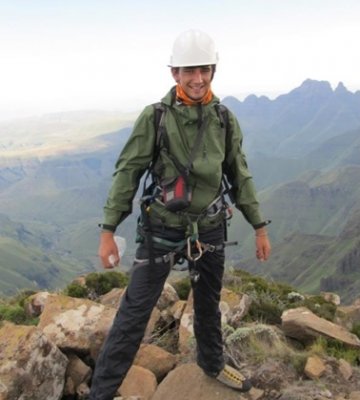

Come on let’s face it, this will just put a extra burden on the tax payer, (sounds like the world cup stadiums) because the running costs will be so high that no private person would want to run it with out help from our government. Then there is all the tendering and back hands going with it, someone is going to be making lots of money and I don’t think it will be the amaZizi community.
I don’t know about other hikers, but I do make a positive contribution to the economy by just being a hiker, because with all the equipment I bought over the years, I have been creating quite a few jobs, and will continue to do so.
Please Log in or Create an account to join the conversation.

Although correctly described as the easiest way to get to the top of The Amphitheatre, it is not for the unfit or faint-hearted, and the return trip takes at least five hours.
Not sure where 5 hours comes from - its only something like 6km from Sentinel Carpark to the top of the falls and back again. an unfit group can easily do it in 3 hours.
The chain ladders can be replaced by a cable car, if not an escalator, and golf carts could ferry people on the current walking path.
Dynamite is required for 2 bits of this - that small metal ladder and that wet eroded rock near it. I guess they would need to concrete and widen the entire path to implement this. I wonder if they plan to allow people to walk along this walkway, or if they'll close it to hikers (along with Beacon Buttress Gully and Sentinel Caves - Sentinel climbing routes for that matter).
Also note that this is not a wheelchair friendly setup. The most marginalised demographic on earth is the disabled. This is an internal contradiction?
The Amphitheatre also contains the source of the Orange River, near the well named Mont Aux Sources, one of the highest points in southern Africa. For once, the use of the adjective “awesome” is fitting when you stand atop The Amphitheatre.
Old myths aside - the Kubedu river is a tributary of the Orange. But at least they aren't calling it the highest peak in SA. Not that Mont Aux Sources is even in the top 200 highest peaks in Southern Africa, but anyway.
Reading this article again - it looks like they are scrapping the Singati cable car idea? Anybody got something more conclusive?
Please Log in or Create an account to join the conversation.


Guardian wrote: And bringing Mandela in.
"I dream of our vast deserts, of our forests, of all our great wildernesses. We must never forget that it is our duty to protect this environment" - Nelson Mandela
Please Log in or Create an account to join the conversation.
Then why has the AmaZizi's own plan for their own land been grossly ignored? They have very elaborate plans for managing and preserving their own land, which has been established over many years with a lot of consultation from experts in the field. Their own community projects already create many employment opportunities. And why has their own clear objection to the cableway been ignored?The park is flanked by some of the poorest, most degraded areas in South Africa and Lesotho. The lack of employment, and the overcrowding of people and livestock, is glaring on the South African side, while the altitude and sparse grazing in Lesotho ensure a tough life for the inhabitants.
In the case of the uKhahlamba Drakensberg Park, then, for the adjacent communities the grass is indeed greener on the other side.
It is an untenable result of colonial and apartheid policies, and the desperate need to create permanent employment opportunities has to be acknowledged. Any project aimed at that must get a fair hearing.
I'd like to call on all individuals and organisation following this debate to let their voice be heard. The objection is far bigger that from environmental organisations and hikers and climbers.
Remember too, to add your voice to the Avaaz petition calling for the proposal to be stopped.
secure.avaaz.org/en/petition/Michael_Mabuyakhulu_MEC_Economic_Development_Tourism_KwaZuluNatal_Stop_the_proposed_Busingatha_cableway_in_the_Drakensbe/?eClrFgb
Take nothing but litter, leave nothing but a cleaner Drakensberg.
Please Log in or Create an account to join the conversation.

The Mercury
Professor Guy is a research fellow at the Campbell Collections of the University of KwaZulu-Natal and the author of several books on the history of the province.
Berg cable debate ignores people
It was with increasing concern that I read the front-page story “Ezemvelo’s Warning: Cableway to impact on heritage site” (The Mercury, February 10).
The debate on whether the cable car plan for the Drakensberg should go ahead has thus far not taken into account how it would affect the local communities whose ancestors have lived and toiled the land in the area for two centuries, writes Jeff Guy
And it was caused not just by the suspicious combination of vagueness and urgency with which the initial R570 million scheme for the cableway is being promoted, but also by Ezemvelo’s hopefully well-intentioned intervention, as reported in your story.
My worry is that so much attention is being paid to the possible consequences of the cableway for heritage, tourism and the environment and so little to the people living in the area. As a result a tract of territory, 30km wide and long, running up to the border with Lesotho between the Royal National and the Cathedral Parks, the home of thousands of people for more than two centuries, is dismissed as a “gap between two sections of the park”.
Consider the first paragraph: it is feared that the plan “could jeopardise the status” of a World Heritage Site as well as the “plans to join up fragments of the mountain wilderness area”.
We are then made to understand that Unesco has been informed of the damage that “inappropriate development” might cause to “environmental and cultural assets”. One reads that the World Heritage Bureau expressed concern that the park was “split into two parts” and recommended that it be joined “to form an unbroken mountain heritage site”.
The cableway might not only “scupper” these plans, but damage the alpine environment and the prospects of the already threatened Cape and Bearded Vultures.
The article ends by summarising Ezemvelo’s doubts about the economic viability of the project and the possibility that a “white elephant” might intrude on a World Heritage site.
While it is difficult to disagree with Ezemvelo’s warnings, my concern is that they also reveal the typically blinkered view of the bureaucrat and the professional expert. Given that the whole point is to reach the edge of the escarpment in order to give the cablecar passenger the most extensive outlook, it will also dominate the views of those looking up from below.
This, together with the economic and spatial demands, will alter not just the physical but the social environment too. It would seem that the cableway is being planned to traverse the north-western border of the AmaZizi Territorial Authority which will in turn have an impact on the neighbouring AmaNgwane Territory.
This land has been occupied by the ancestors of the present population from before colonial rule. Their histories are rich, hard and courageous. Occupying marginal land in the rugged foothills of the Drakensberg, they adapted to new environments, cultivating land along the valleys to the very sources of the rivers that feed Natal, and driving their cattle high into the mountains for summer grazing. And they do so today.
But their lives cannot be sentimentalised. These were the rural homes of the labourers on the farms and the mines of South Africa, providing a place of economic support and physical recuperation. And they had to fight for this – against the state that criminalised a traditional crop which became a significant income earner – dagga; against the dams that flooded their land; and against the apartheid plans to remove them from it.
The area which the cableway will dominate is a place for which people have fought for two centuries, enabling the men, women, and children who lived there to survive in a hard, exploitative world. For the tourist, the planner, the entrepreneur or Unesco’s environmental experts it might be a “gap”, an unwanted intrusion in a mountain wilderness heritage site: to the tens of thousands of people who live there it is home.
The absence in your story of any evidence that the views of these people have been taken into account is worrying.
One’s concern is increased by the article’s assumption that the desires of those who look down on the world from the comfort of the luxury hotel or its accessory, the R350 cableway trip, are a priority. Of course we have to be concerned about economic development – but it must be appropriate.
Has anyone considered, for example, developing initiatives like those at the Mnweni Cultural and Hiking Centre in the adjoining valley? Simple, well-kept accommodation: informative guided hikes into the mountains, through the houses and cultivated land, among the cattle and the natural resources, across the trails high in the mountains along which pack animals move goods and products to this day.
This is not the world for the conventional well-heeled tourist. But it is one greatly enjoyed by the increasing number of hikers, backpackers, students, photographers, researchers, generally interested in the vast variety of the ways in which South Africans live.
And their numbers could be increased immensely if only we could move away from the stereotypical attitudes to development, tourism, heritage and mountain wildernesses – all of which are exemplified in the debate around this scheme to build a cableway in the Drakensberg.
It is time for a much more considered debate on such initiatives.
One which, above all, would allow for the voice of the thousands most directly affected to be heard.
Please Log in or Create an account to join the conversation.

 . Thanks mnt_tiska!
 Please Log in or Create an account to join the conversation.


Please Log in or Create an account to join the conversation.
- no4stopper
-

- Offline
- Senior Member
-

- Posts: 59
- Thank you received: 94
Walking thirty miles with a pack on his back
And he put down his load where he thought it was the best
Made a home in the wilderness
He built a cabin and a winter store
And he ploughed up the ground by the cold lake shore
And the other travellers came riding down the track
And they never went further, no, they never went back
Then came the churches then came the schools
Then came the lawyers then came the rules
Then came the trains and the trucks with their loads
And the dirty old track was the telegraph road
Then came the mines - then came the ore
Then there was the hard times then there was a war
Please Log in or Create an account to join the conversation.
Current:
- 412 in favour (93%)
- 32 against (7%)
The survey has still only seen 48 responses, and I see the petition is up to 1429 signatures.
I see ECR has quoted me on their website: www.ecr.co.za/post/berg-cableway-plan-has-flaws-analyst/
Please Log in or Create an account to join the conversation.
